EN
EN


Navigating Europe’s Evolving Grid Codes and Carbon Tariffs: A Strategic Guide for C&I Solar Distributors
Introduction: A Landscape in Flux
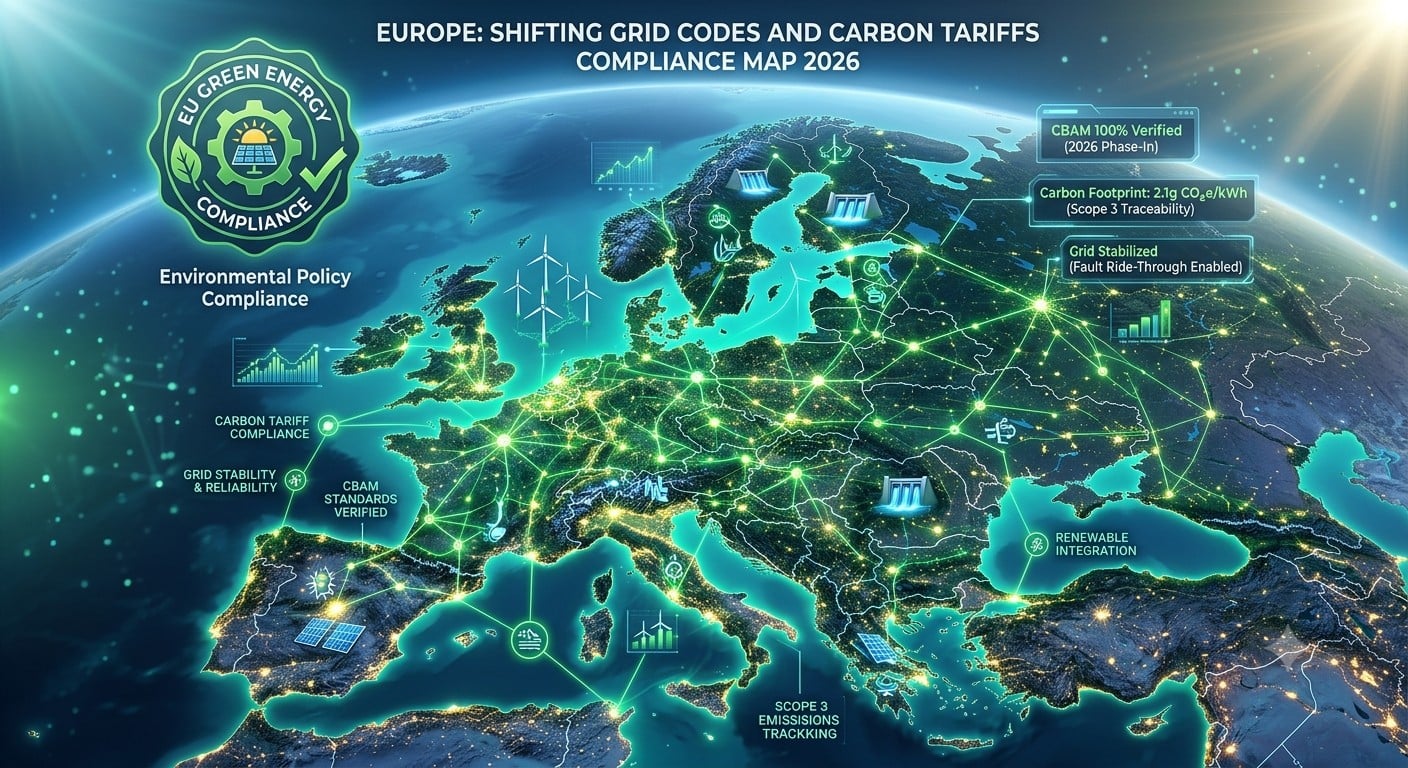
The European renewable energy landscape is undergoing its most profound transformation in a generation. Driven by the ambitious goals of the European Green Deal and an urgent imperative for energy independence, solar photovoltaic installations across Europe have reached historic highs. However, this rapid influx of intermittent renewable energy has placed unprecedented stress on regional electrical grids. In response, European regulatory bodies and grid operators are introducing strict new grid codes and complex carbon accounting mechanisms. For international solar distributors, project developers, and EPC contractors, staying profitable means thoroughly understanding these shifting legal frameworks. Failing to adapt is no longer just a minor compliance issue—it is a major threat to project viability.
Deconstructing Europe's New Grid Stabilization Requirements
Historically, solar inverters were simply required to feed maximum power into the grid. Those days are officially over. Modern European grid codes—such as Germany’s VDE-AR-N 4105 and the broader European Network of Transmission System Operators for Electricity (ENTSO-E) requirements—now mandate that distributed solar systems actively contribute to grid stability.
Solar inverters must now possess advanced capabilities, including dynamic grid support, reactive power regulation, and Fault Ride Through (FRT) functionality. During a sudden grid voltage drop or frequency fluctuation, inverters cannot simply disconnect. They must remain online, injecting reactive or active power to help stabilize the local grid network. Additionally, grid operators are increasingly demanding absolute remote curtailment capabilities, allowing them to scale back solar inputs during periods of oversupply to prevent grid failure. For distributors, sourcing inverters that lack these advanced programmable functions means facing outright rejection during the local utility permitting process.
The Rising Impact of the Carbon Border Adjustment Mechanism (CBAM)
Beyond the electrical grid itself, environmental policy is rewriting the rules of international trade. The European Union’s Carbon Border Adjustment Mechanism (CBAM) is entering a critical phase. Designed to prevent 'carbon leakage,' CBAM places a carbon tariff on carbon-intensive goods imported into the EU. While initially targeting foundational materials like steel and cement, the underlying philosophy is rapidly expanding across the clean energy supply chain.
European corporate buyers are now demanding full transparency regarding the embodied carbon footprint of the solar modules and lithium batteries they purchase. Scope 3 emissions—which encompass the entire upstream supply chain of a product—are being intensely scrutinized during corporate tenders. Solar manufacturers who cannot provide verified Environmental Product Declarations (EPDs) will find themselves locked out of high-value European commercial and industrial projects, regardless of how competitive their hardware pricing might be.
The Strategic Remedy: Solar-Plus-Storage and Certified Supply Chains
To navigate this dual challenge of tightening grid codes and strict carbon accounting, forward-thinking distributors are pivoting toward unified solar-plus-storage architectures. By pairing high-capacity commercial lithium battery energy storage systems (BESS) with intelligent hybrid inverters, businesses can effectively bypass grid injection limitations.
· Peak Shaving and Time-of-Use (ToU) Optimization: Instead of feeding excess solar energy back into an unstable, heavily restricted grid at low feed-in tariffs, companies can store surplus energy locally and discharge it during peak tariff hours.
· Zero-Export Compliance: In regions where grid operators completely prohibit new solar injections due to saturation, intelligent energy management systems can throttle inverter output to match local building consumption perfectly, achieving 100% zero-export compliance.
Simultaneously, mitigating carbon tariff risks requires partnering with manufacturers who maintain deeply traceable, clean-energy-powered manufacturing facilities. Utilizing automated production lines powered by renewable energy lowers the embodied carbon footprint of the final solar components, making them fully compliant with Europe's rigorous corporate procurement standards.
Future-Proofing Your Inventory for 2026 and Beyond
For a solar distribution business to thrive in this regulatory climate, inventory selection must be deeply proactive. Relying on legacy inverter designs or non-transparent module supply chains is a recipe for stranded inventory. Distributors must deliberately curate a portfolio of smart hardware capable of over-the-air (OTA) firmware updates, ensuring that as local utility codes evolve, installed systems can be reconfigured remotely without requiring expensive hardware replacements.
Conclusion & Call to Action
The complexities of European energy policies can serve as a formidable barrier to entry, or they can be leveraged as an incredible competitive advantage. By aligning your business with compliant, technologically advanced hardware, you position your brand as a sophisticated, reliable partner in the European energy transition.
Stay ahead of shifting international regulations. Download our comprehensive whitepaper, Navigating European Grid Compliance and CBAM for Solar Distributors, or consult with our regulatory compliance team to audit your upcoming project inventory.