 EN
EN

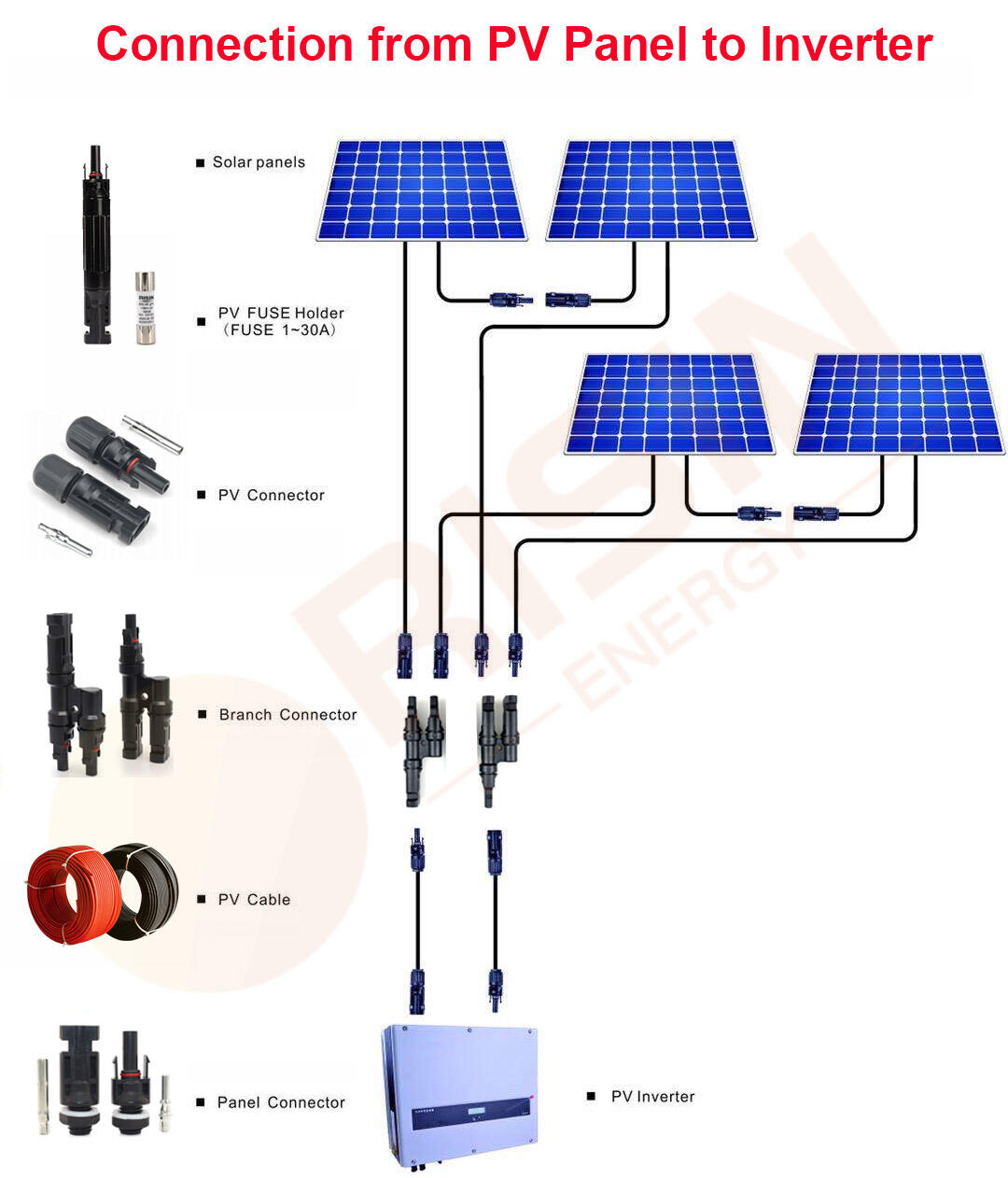
When designing a photovoltaic system, one of the most consequential decisions an installer or engineer faces is how to wire the panels together. The choice between solar panel series vs parallel wiring is not simply a matter of preference — it directly determines how much usable power your system delivers, how it responds to shading, and whether it remains compatible with your inverter and charge controller. Understanding this distinction is foundational to building a system that performs as expected under real-world conditions.

The debate around solar panel series vs parallel wiring touches every segment of the solar industry, from small off-grid cabins to large commercial rooftop installations. Each configuration has a distinct electrical profile, and the impact on power output is measurable and significant. This article breaks down the electrical mechanics of both approaches, explains how each affects voltage, current, and total power, and helps you understand which configuration — or combination — best suits a given application.
The Electrical Fundamentals Behind Series and Parallel Wiring
How Series Wiring Changes Voltage and Current
In a series configuration, solar panels are connected end-to-end, with the positive terminal of one panel linked to the negative terminal of the next. The result is that voltage adds up across the string while the current remains constant and equal to the rating of a single panel. For example, if you connect four panels each rated at 40 volts and 10 amps in series, the string produces 160 volts at 10 amps, yielding 1,600 watts of theoretical output.
This voltage-stacking behavior is the defining characteristic of series wiring in the solar panel series vs parallel discussion. Higher voltage strings are particularly well-suited to string inverters and MPPT charge controllers that require a minimum input voltage to operate efficiently. The elevated voltage also reduces resistive losses in the wiring between the array and the inverter, which is a practical advantage in larger installations where cable runs are long.
However, the series configuration introduces a critical vulnerability: if any single panel in the string underperforms — due to shading, soiling, or a manufacturing defect — the current through the entire string is limited to the weakest panel's output. This is sometimes called the 'Christmas light effect,' and it can cause disproportionate power losses relative to the size of the obstruction.
How Parallel Wiring Changes Voltage and Current
In a parallel configuration, all positive terminals are connected together and all negative terminals are connected together. This means the voltage across the array stays equal to the voltage of a single panel, while the current from each panel adds together. Using the same four panels rated at 40 volts and 10 amps, a parallel array produces 40 volts at 40 amps — again 1,600 watts in theory, but with a very different electrical profile.
The lower voltage and higher current of parallel wiring in the solar panel series vs parallel comparison has important implications for system design. Lower voltage arrays are generally safer to handle and may be required by electrical codes in certain residential or low-voltage applications. They are also more compatible with PWM charge controllers commonly used in smaller off-grid systems.
The key advantage of parallel wiring is its resilience to partial shading. Because each panel operates independently on its own current path, a shaded or underperforming panel does not drag down the output of its neighbors. The overall array current drops only by the contribution of the affected panel, rather than collapsing the entire string's output.
How Each Configuration Affects Real-World Power Output
Power Output Under Ideal Conditions
Under standard test conditions with no shading and uniform irradiance, both series and parallel configurations of the same panels will produce the same theoretical maximum power. The total wattage is simply the sum of all individual panel ratings regardless of how they are wired. In this sense, the solar panel series vs parallel choice does not create a difference in peak power output when conditions are perfect.
What does differ is how that power is delivered to the load or inverter. A series string delivers high voltage at low current, while a parallel array delivers low voltage at high current. The inverter or charge controller must be matched to whichever profile the array produces. Mismatching the array configuration to the inverter's input specifications is one of the most common causes of underperformance in newly commissioned systems.
Installers working with high-efficiency monocrystalline panels — such as those in the 545W to 565W range — need to be especially careful about voltage ceilings. A long series string of high-voltage panels can easily exceed the maximum input voltage of a standard string inverter, triggering protective shutdowns and reducing effective energy harvest.
Power Output Under Partial Shading and Non-Uniform Conditions
The real divergence in the solar panel series vs parallel performance comparison emerges when conditions are not ideal. Partial shading is the most common real-world challenge, and it exposes the fundamental difference between the two wiring strategies. In a series string, even a small shadow covering a fraction of one panel can reduce the output of the entire string to near zero if bypass diodes are not functioning correctly.
In a parallel array, the same shadow affects only the panel it covers. The remaining panels continue to produce at full capacity, and the total power loss is proportional to the shaded panel's contribution rather than the entire string's output. For installations on rooftops with chimneys, vents, or nearby trees, this resilience can translate into meaningfully higher annual energy yield.
Field data from commercial installations consistently shows that parallel-wired arrays or series-parallel hybrid configurations outperform purely series-wired arrays in environments with variable shading. The difference in annual yield can range from a few percentage points to over 20 percent depending on the severity and frequency of shading events.
System Compatibility and the Role of Inverter Design
String Inverters and the Case for Series Wiring
String inverters are the most widely deployed inverter type in residential and commercial solar installations, and they are designed around the electrical characteristics of series-wired strings. They require a minimum DC input voltage — often between 150 and 200 volts — to begin converting power, and they operate most efficiently within a defined voltage window known as the MPPT range. Series wiring in the solar panel series vs parallel context is the natural match for this inverter architecture.
When designing a series string for a string inverter, the installer must calculate the maximum open-circuit voltage of the string at the lowest expected ambient temperature, since panel voltage rises as temperature drops. Exceeding the inverter's maximum input voltage can cause permanent damage to the inverter's input stage. This calculation is a mandatory step in any professional system design process.
String inverters also benefit from the lower current levels that series wiring produces. Lower current means thinner, less expensive DC cabling can be used between the array and the inverter, reducing both material costs and installation labor. For large commercial rooftop systems where cable runs can span hundreds of meters, this cost advantage is substantial.
Microinverters, Power Optimizers, and Parallel-Friendly Architectures
Microinverters and DC power optimizers represent a different approach to the solar panel series vs parallel question. Microinverters convert DC to AC at the panel level, effectively making each panel an independent generator. This eliminates the string-level shading vulnerability entirely and allows panels to be oriented in multiple directions without mutual interference.
Power optimizers sit between the panel and a central string inverter, performing panel-level MPPT tracking before feeding a conditioned DC output into the string. This hybrid approach captures many of the shading resilience benefits of parallel wiring while retaining the cost efficiency of a central inverter. It is particularly popular in residential installations where roof geometry creates unavoidable shading challenges.
For off-grid systems using MPPT charge controllers, the solar panel series vs parallel decision is often resolved by the controller's voltage and current input limits. Many MPPT controllers accept a wide voltage range and can handle either configuration, but the installer must verify that the array's open-circuit voltage does not exceed the controller's maximum rating under cold-temperature conditions.
Series-Parallel Hybrid Configurations and Their Power Implications
When Hybrid Wiring Makes Sense
In practice, many solar installations use a combination of series and parallel wiring — often called a series-parallel or series-parallel hybrid configuration. In this approach, multiple series strings are wired in parallel with each other. This allows the designer to achieve a target voltage level through series connections while scaling total current and power capacity through parallel connections.
The solar panel series vs parallel hybrid approach is standard in utility-scale and large commercial systems where hundreds or thousands of panels must be integrated into a single inverter or combiner box. Each series string is sized to match the inverter's MPPT voltage window, and multiple strings are paralleled at a combiner box before entering the inverter. This architecture balances voltage compatibility, shading resilience, and system scalability.
For smaller systems, hybrid wiring can also be used to work around the limitations of available equipment. If a charge controller has a maximum current input of 60 amps but the designer wants to use eight panels each producing 10 amps, wiring them as two series strings of four panels each — then paralleling those two strings — keeps the current within the controller's rating while doubling the voltage to an acceptable level.
Balancing Voltage, Current, and Power in Hybrid Arrays
Designing a hybrid array requires careful attention to balance. All series strings within a parallel group should contain the same number of panels with the same electrical specifications. Mixing panels of different ratings within a series string creates mismatch losses, and connecting series strings of different voltages in parallel can cause reverse current flow and potential damage to panels or wiring.
The solar panel series vs parallel hybrid design also requires that all strings in a parallel group use identical panel models and orientations wherever possible. Even small differences in panel temperature — caused by different mounting angles or partial shading on one string — can create voltage imbalances that reduce the efficiency of the MPPT algorithm and lower total power output.
Professional system designers use simulation software to model the expected output of hybrid arrays under various shading and temperature scenarios before finalizing the wiring configuration. This modeling step is especially important for high-power panels in the 545W to 565W class, where the consequences of misconfiguration are amplified by the higher per-panel power levels.
Practical Decision Criteria for Choosing Between Series and Parallel
Factors That Favor Series Wiring
Series wiring is the preferred choice when the installation uses a string inverter with a defined MPPT voltage window, when the roof or mounting surface is unobstructed and receives uniform irradiance throughout the day, and when minimizing DC cable costs is a priority. The solar panel series vs parallel decision tilts toward series in commercial flat-roof installations where panels can be arranged in long, unshaded rows.
Series wiring also simplifies the combiner box design in large systems, since fewer parallel connections mean fewer fuses, disconnects, and potential fault points. For systems in regions with consistently clear skies and minimal shading, the shading vulnerability of series wiring is rarely triggered, and the cost and simplicity advantages dominate the decision.
High-efficiency monocrystalline panels with elevated open-circuit voltages are particularly well-suited to series configurations because their higher per-panel voltage means fewer panels are needed to reach the inverter's minimum MPPT voltage. This reduces the number of series connections required and simplifies string design.
Factors That Favor Parallel Wiring
Parallel wiring is the better choice when the installation environment includes frequent or unavoidable shading, when the system uses a PWM charge controller with a fixed voltage requirement, or when the designer needs to keep system voltage below a regulatory threshold. The solar panel series vs parallel decision favors parallel in small off-grid systems, marine applications, and installations on complex rooftops with multiple obstructions.
Parallel wiring also offers a safety advantage in low-voltage systems. Arrays operating below 50 volts DC are generally classified as extra-low voltage under most electrical codes, reducing the regulatory requirements for conduit, disconnects, and qualified installer certification. For DIY off-grid builders, this can significantly simplify the permitting and installation process.
The higher current levels of parallel arrays do require heavier gauge wiring and more robust connectors, which adds material cost. However, for short cable runs typical of small off-grid systems, this cost difference is usually modest and is outweighed by the shading resilience and simplicity benefits of the parallel configuration.
FAQ
Does solar panel series vs parallel wiring affect the total power output under ideal conditions?
Under ideal conditions with no shading and uniform irradiance, both series and parallel configurations produce the same total theoretical power output. The difference lies in how that power is delivered — series wiring produces higher voltage at lower current, while parallel wiring produces lower voltage at higher current. The configuration choice affects system compatibility and real-world performance rather than peak theoretical output.
Which wiring method is better for shaded installations?
Parallel wiring is generally more resilient to partial shading because each panel operates independently. In a series string, a shaded panel can reduce the output of the entire string, while in a parallel array, only the shaded panel's contribution is lost. For installations with unavoidable shading from trees, chimneys, or neighboring structures, parallel or series-parallel hybrid configurations with power optimizers or microinverters are strongly preferred.
Can I mix series and parallel wiring in the same solar array?
Yes, series-parallel hybrid configurations are standard practice in medium and large solar installations. Multiple series strings are wired in parallel to achieve a target voltage while scaling total current capacity. For this to work correctly, all series strings in the parallel group must contain the same number of identical panels to avoid mismatch losses and potential reverse current issues.
How does the solar panel series vs parallel choice affect inverter selection?
The wiring configuration directly determines the array's output voltage and current, which must fall within the inverter's or charge controller's specified input range. String inverters require a minimum MPPT voltage that typically favors series wiring, while PWM charge controllers used in small off-grid systems often work better with parallel arrays. Always verify that the array's open-circuit voltage under cold-temperature conditions does not exceed the inverter's maximum input voltage rating.
Table of Contents
- The Electrical Fundamentals Behind Series and Parallel Wiring
- How Each Configuration Affects Real-World Power Output
- System Compatibility and the Role of Inverter Design
- Series-Parallel Hybrid Configurations and Their Power Implications
- Practical Decision Criteria for Choosing Between Series and Parallel
- FAQ