 EN
EN
If you have ever looked into solar energy for your home or business, you have almost certainly come across the term solar inverters. Yet for many people, the role these devices play remains unclear. While solar panels tend to get most of the attention in any photovoltaic system, solar inverters are equally critical — they are the component that actually makes the electricity your panels generate usable in your building. Without them, the energy captured from sunlight would be completely incompatible with the appliances, lighting, and equipment you rely on every day.
This article explains exactly what solar inverters are, how they function within a photovoltaic system, and why they are an indispensable part of any solar energy setup. Whether you are planning a residential rooftop installation, a commercial energy project, or an off-grid power solution, understanding solar inverters will help you make better decisions about your system design, component selection, and long-term energy strategy.
What Solar Inverters Actually Do
The Core Function: Converting DC to AC Power
Solar panels generate electricity through the photovoltaic effect, producing direct current, commonly known as DC power. However, virtually all standard household and commercial electrical systems operate on alternating current, or AC power. This fundamental incompatibility is precisely where solar inverters come in. Their primary job is to convert the DC electricity produced by your solar panels into AC electricity that your building's electrical system can actually use.
This conversion process is not trivial. Solar inverters must manage fluctuating input voltages from the panels — which change constantly depending on sunlight intensity, temperature, and shading — and produce a stable, clean AC output that meets grid or load requirements. The quality of this conversion directly affects how efficiently your solar system performs and how reliably your connected equipment operates.
Modern solar inverters are sophisticated electronic devices that use advanced switching technology, typically insulated-gate bipolar transistors or similar components, to perform this conversion at very high efficiency levels. Premium solar inverters routinely achieve conversion efficiencies above 97%, meaning very little of the energy your panels generate is lost during the inversion process.
Beyond Conversion: Additional Roles Solar Inverters Play
Solar inverters do far more than simply convert DC to AC. They also serve as the intelligent management hub of your entire solar energy system. Most modern solar inverters continuously monitor the performance of your solar array, tracking voltage, current, power output, and system health in real time. This monitoring capability allows you to identify underperforming panels, detect faults early, and optimize your system's overall output.
In grid-tied systems, solar inverters are responsible for synchronizing the AC output with the utility grid's frequency and voltage. This synchronization is essential for safe grid connection and is governed by strict technical standards in most countries. Solar inverters also handle anti-islanding protection, automatically disconnecting from the grid during a power outage to prevent dangerous backfeed that could injure utility workers.
For systems that include battery storage, solar inverters manage the charging and discharging of batteries, balancing energy flow between the panels, the batteries, the load, and the grid. This energy management function is what allows hybrid solar systems to maximize self-consumption, reduce grid dependency, and provide backup power during outages.
The Main Types of Solar Inverters
String Inverters and Their Typical Applications
String solar inverters are the most widely deployed type in both residential and commercial installations. In a string inverter setup, multiple solar panels are connected in series to form a 'string,' and that string feeds into a single inverter. String solar inverters are cost-effective, straightforward to install, and relatively easy to maintain, making them a practical choice for installations where panels face a consistent direction and experience minimal shading.
The main limitation of string solar inverters is that the performance of the entire string is constrained by the weakest panel. If one panel is shaded or underperforming, it reduces the output of every panel in that string. For rooftops with complex geometry or significant shading from trees or neighboring structures, this characteristic can meaningfully reduce overall system yield.
Despite this limitation, string solar inverters remain the dominant choice for straightforward installations due to their proven reliability, lower upfront cost, and the availability of sophisticated monitoring features in modern units. Many commercial and industrial projects continue to rely on string solar inverters as their primary conversion technology.
Hybrid Solar Inverters for Storage-Ready Systems
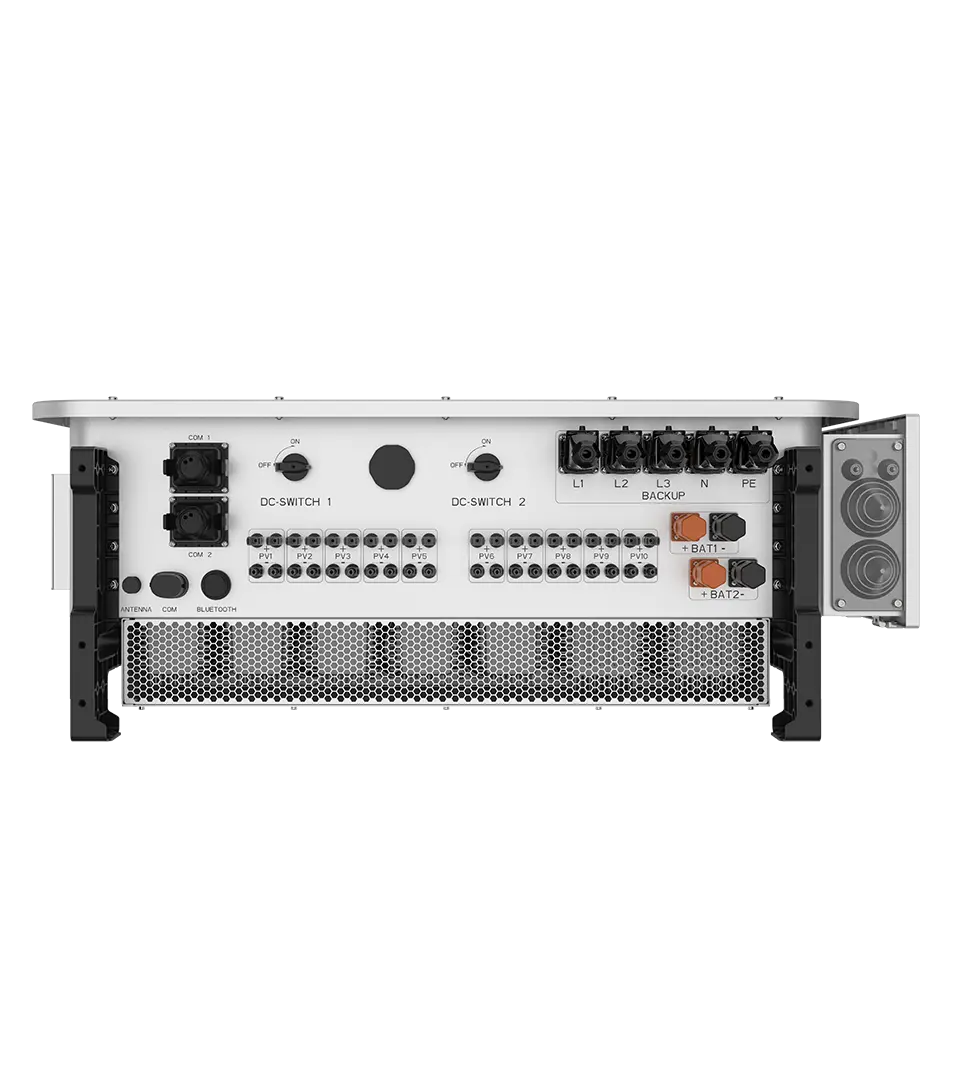
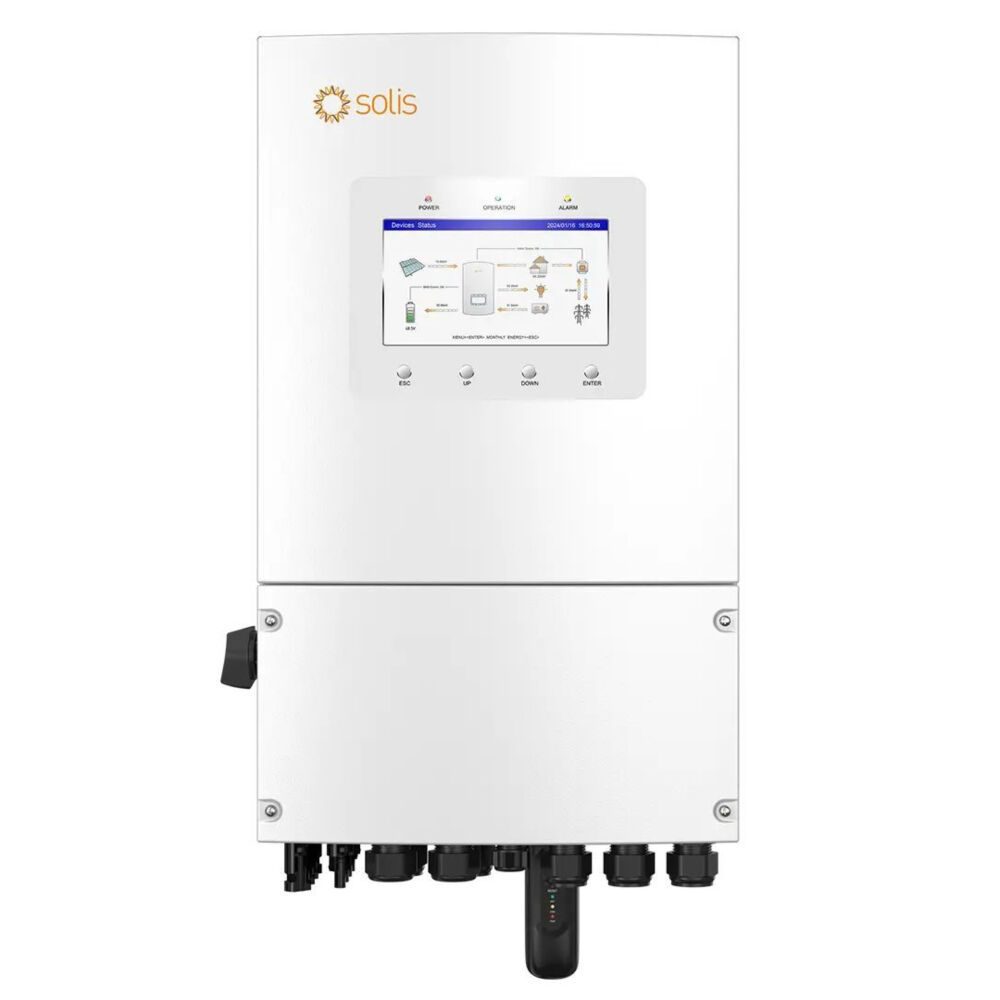
Hybrid solar inverters represent a significant evolution in inverter technology. Unlike standard string solar inverters, hybrid models integrate battery charge controller functionality directly into the inverter unit. This means a single hybrid solar inverter can manage energy flow between your solar panels, your battery bank, your building's loads, and the utility grid — all within one device.
This integration simplifies system design, reduces the number of components required, and often lowers overall installation costs compared to pairing a standard inverter with a separate battery management system. Hybrid solar inverters are particularly well-suited to residential and small commercial applications where energy independence, backup power capability, and time-of-use optimization are priorities.
The growing adoption of battery storage in solar installations has made hybrid solar inverters increasingly popular. As electricity tariffs become more complex and grid reliability concerns grow in many regions, the ability of hybrid solar inverters to intelligently manage stored energy is becoming a key decision factor for system designers and end users alike.
Microinverters and Module-Level Power Electronics
Microinverters are small solar inverters installed directly on each individual solar panel, converting DC to AC at the module level rather than at a central point. This approach eliminates the 'weakest link' problem associated with string solar inverters, because each panel operates independently. Shading or soiling on one panel does not affect the output of any other panel in the array.
Microinverters also simplify system expansion, since adding panels does not require resizing a central inverter. Their per-panel monitoring capability provides granular visibility into system performance. However, microinverters typically carry a higher per-watt cost than string solar inverters, and having more units distributed across the roof can complicate maintenance if a unit fails.
For installations with complex roof layouts, multiple orientations, or significant partial shading, microinverters can deliver meaningfully higher energy yields than string solar inverters. The right choice between these technologies depends on the specific site conditions, budget, and performance priorities of each project.
Why Solar Inverters Are Essential to Your Energy System
They Determine How Much Energy You Actually Use
The efficiency and capability of your solar inverters directly determine how much of your panels' potential output you can actually put to work. A high-quality solar inverter with advanced maximum power point tracking, or MPPT, continuously adjusts its operating parameters to extract the maximum available power from your panels under any given conditions. This optimization can make a measurable difference in annual energy yield, particularly in climates with variable cloud cover or significant temperature swings.
Solar inverters with multiple independent MPPT inputs allow panels on different roof orientations or with different shading profiles to be managed separately, further improving overall system performance. For commercial installations where maximizing energy output per square meter of roof space is a financial priority, the MPPT architecture of your solar inverters is a critical specification to evaluate.
Conversion efficiency is another key metric. Even a difference of one or two percentage points in inverter efficiency, compounded over thousands of operating hours per year, translates into a meaningful difference in total energy delivered over the system's lifetime. Choosing solar inverters with high peak and weighted efficiency ratings is a straightforward way to improve the financial return of your solar investment.
They Protect Your System and Your Building
Solar inverters incorporate multiple layers of protection that safeguard both your solar installation and your building's electrical infrastructure. Overvoltage protection, overcurrent protection, ground fault detection, and arc fault circuit interruption are standard features in quality solar inverters. These protections reduce the risk of equipment damage, electrical fires, and safety hazards that could otherwise arise from faults in the solar array or wiring.
Grid protection functions built into solar inverters monitor utility voltage and frequency continuously. If grid conditions fall outside acceptable parameters — due to a fault, a storm, or a utility switching event — the solar inverters disconnect automatically to protect both the connected equipment and the grid itself. This automatic response happens in milliseconds and requires no manual intervention.
For off-grid and hybrid systems, solar inverters also protect battery banks from overcharging and deep discharge, both of which can permanently damage battery cells and shorten battery life. Proper battery management through the inverter is essential to preserving the long-term performance and value of your energy storage investment.
They Enable Smart Energy Management
Modern solar inverters are not passive conversion devices — they are intelligent energy management platforms. Through built-in communication interfaces such as Wi-Fi, Ethernet, RS485, or CAN bus, solar inverters connect to monitoring platforms, building energy management systems, and smart home controllers. This connectivity allows you to track your system's performance in real time, receive alerts about faults or anomalies, and make informed decisions about your energy consumption patterns.
Advanced solar inverters support demand response functions, allowing them to adjust output or shift battery discharge in response to grid signals or time-of-use tariff schedules. This capability is increasingly valuable as electricity markets evolve and dynamic pricing becomes more common. Businesses that deploy solar inverters with robust energy management features can actively reduce their peak demand charges and optimize their electricity costs beyond simple self-consumption.
Remote firmware updates, remote diagnostics, and cloud-based performance analytics are now standard features in leading solar inverters. These capabilities reduce the need for on-site service visits, lower maintenance costs, and ensure that your solar inverters continue to operate with the latest performance optimizations and safety updates throughout their service life.
Key Factors to Consider When Choosing Solar Inverters
Matching Inverter Capacity to Your System Size
Selecting solar inverters with the right power rating for your installation is fundamental to system performance and longevity. An undersized inverter will clip the output of your panels during peak production periods, wasting available energy. An oversized inverter, on the other hand, will operate at low load for much of the day, reducing its efficiency and potentially shortening its service life.
Most system designers apply a DC-to-AC ratio, sometimes called the inverter loading ratio, to deliberately size the solar array slightly larger than the inverter's rated AC output. This approach, known as 'clipping,' is often economically justified because the additional panel capacity generates more energy during morning, evening, and overcast conditions without significantly increasing the hours of clipped output at peak irradiance. Understanding this sizing logic is important when evaluating solar inverters for any project.
Battery capacity, if applicable, must also be matched to the inverter's charge and discharge rate specifications. Solar inverters designed for hybrid operation specify maximum charge and discharge currents, and pairing them with a battery bank that exceeds these limits will prevent you from fully utilizing your storage capacity. Careful attention to these specifications during system design avoids costly mismatches.
Evaluating Reliability, Warranty, and Support
Solar inverters are the most electronically complex component in a photovoltaic system, and they are also statistically the component most likely to require service or replacement over a system's 25-year design life. Evaluating the reliability track record, warranty terms, and after-sales support of solar inverters is therefore just as important as evaluating their technical specifications.
Standard warranty periods for solar inverters typically range from five to ten years, with extended warranty options available from many manufacturers. When comparing solar inverters, look beyond the headline warranty duration and examine what the warranty actually covers, how claims are processed, and whether local service support is available. A longer warranty from a supplier with strong regional support infrastructure is generally more valuable than a longer warranty from a supplier with limited local presence.
Certifications and compliance with relevant electrical safety and grid connection standards are non-negotiable requirements for solar inverters in most markets. Ensure that any solar inverters you are considering carry the certifications required by your local utility and regulatory authority. Installing non-compliant solar inverters can result in system disconnection, voided insurance, and significant remediation costs.
FAQ
What is the difference between a solar inverter and a solar panel?
Solar panels are the devices that capture sunlight and convert it into DC electricity through the photovoltaic effect. Solar inverters are the devices that convert that DC electricity into AC electricity, which is the form of power used by standard household and commercial electrical systems. Both components are essential — panels generate the energy, and solar inverters make it usable.
Can solar inverters work without batteries?
Yes. Grid-tied solar inverters are specifically designed to operate without batteries. They convert solar panel output directly into AC power and feed it into your building's electrical system or export it to the utility grid. Battery storage is an optional addition that hybrid solar inverters can manage, but it is not a requirement for a functional solar energy system.
How long do solar inverters typically last?
Most solar inverters are designed for a service life of 10 to 15 years under normal operating conditions, though many units perform reliably for longer with proper maintenance. This is shorter than the 25-year design life of solar panels, so most system owners should plan for at least one inverter replacement over the lifetime of their solar installation. Choosing solar inverters with strong warranty coverage and reliable manufacturer support helps manage this lifecycle cost.
Do solar inverters work during a power outage?
Standard grid-tied solar inverters automatically shut down during a grid outage as a safety requirement. Hybrid solar inverters with battery storage, however, can continue to supply power to designated loads during an outage by drawing from the battery bank. If backup power capability is important to you, selecting hybrid solar inverters with islanding or backup mode functionality is essential when designing your system.