 EN
EN

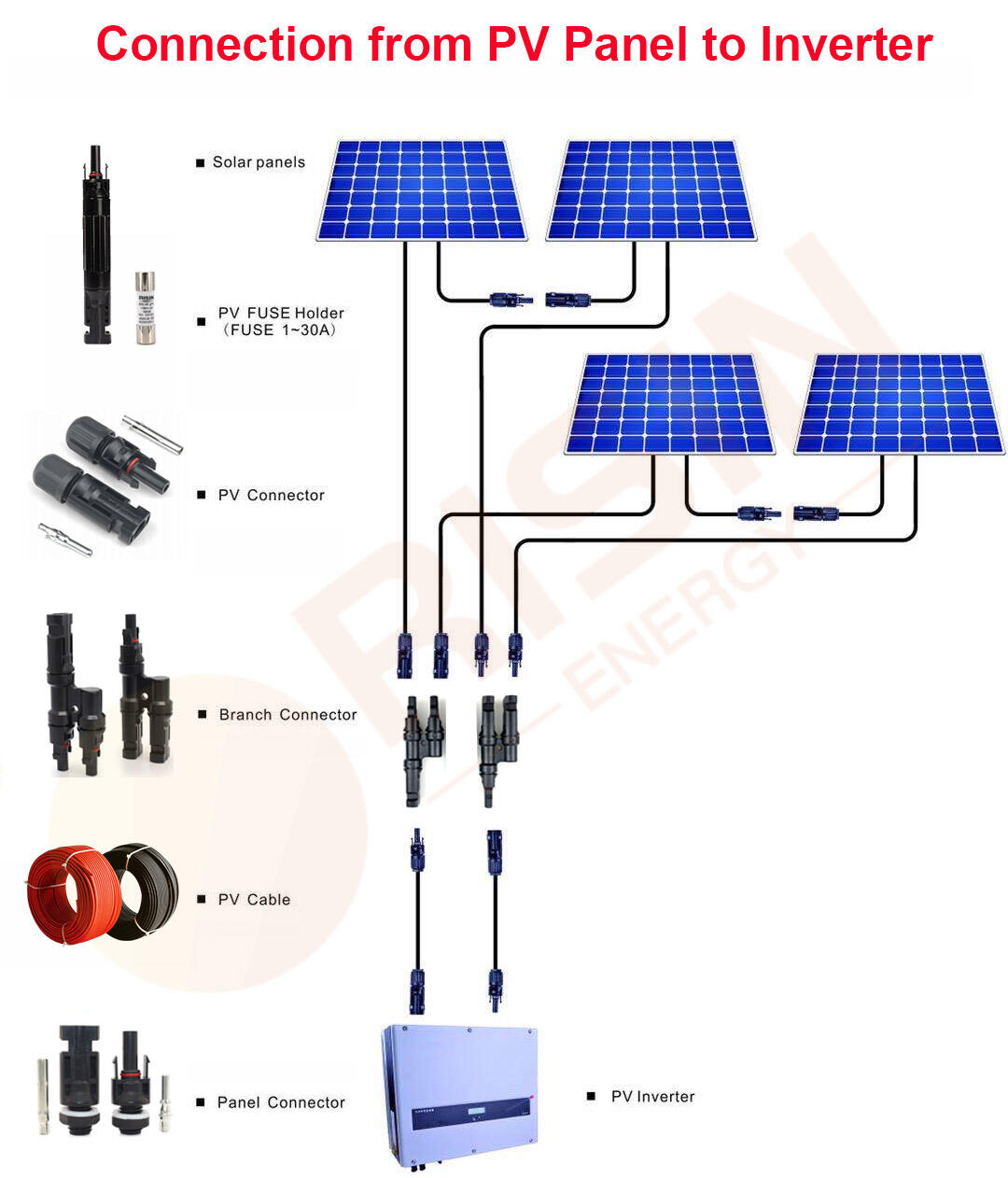
When designing a photovoltaic system, one of the most fundamental decisions an installer or engineer must make is how to connect multiple solar panels together. The concept of solar panel series vs parallel wiring sits at the heart of every PV system layout, directly influencing voltage levels, current output, system compatibility, and overall energy performance. Understanding what each configuration actually means — not just in theory but in practical application — is essential before a single cable is run or a combiner box is selected.

The distinction between solar panel series vs parallel wiring is not merely academic. It determines how your inverter receives power, how the system responds to shading, and how safely and efficiently your installation will operate over its lifetime. Whether you are working on a residential rooftop, a commercial ground-mount array, or an off-grid energy storage system, the wiring configuration you choose will shape every downstream component decision. This article explains exactly what each wiring method means, how it works electrically, and what it implies for real-world system design.
The Electrical Meaning of Series Wiring in Solar Arrays
How Voltage Adds Up in a Series String
In a series-wired solar array, panels are connected end-to-end, with the positive terminal of one panel connected to the negative terminal of the next. This chain-like arrangement is called a 'string.' The defining electrical characteristic of series wiring is that voltage accumulates across each panel in the string, while the current remains constant and equal to the current of a single panel.
For example, if you connect four panels each rated at 40 volts and 10 amps in series, the resulting string will produce 160 volts at 10 amps. This is the foundational principle that makes series wiring attractive for grid-tied systems, where inverters typically require a higher DC input voltage to operate efficiently within their MPPT (Maximum Power Point Tracking) range.
Understanding this voltage-stacking behavior is critical when evaluating solar panel series vs parallel configurations. The series approach allows system designers to reach the inverter's minimum operating voltage with fewer combiner components, simplifying the balance-of-system architecture in many standard installations.
Practical Implications of Series Connections
One important practical implication of series wiring is its sensitivity to shading and soiling. Because the same current must flow through every panel in the string, a single underperforming panel — whether shaded by a tree, a chimney, or accumulated debris — will restrict the current for the entire string. This is sometimes described as the 'weakest link' effect, and it is a key consideration when comparing solar panel series vs parallel performance in real-world conditions.
Series strings also produce higher voltages, which means the wiring, connectors, and inverter inputs must all be rated for those elevated voltage levels. In large commercial or utility-scale systems, series strings can reach 600V, 1000V, or even 1500V DC, requiring careful attention to component ratings and electrical safety standards.
Despite these considerations, series wiring remains the dominant configuration for grid-tied string inverter systems because it aligns naturally with how most inverters are designed to receive and process DC power. The higher voltage, lower current characteristic also reduces resistive losses in the DC cabling, which is a meaningful efficiency advantage over long cable runs.
The Electrical Meaning of Parallel Wiring in Solar Arrays
How Current Adds Up in a Parallel Configuration
In a parallel-wired solar array, all positive terminals are connected together and all negative terminals are connected together. Unlike series wiring, parallel connections cause current to accumulate while voltage remains constant and equal to the voltage of a single panel. Using the same example as before, four panels rated at 40 volts and 10 amps wired in parallel would produce 40 volts at 40 amps.
This current-stacking behavior is the defining characteristic of parallel wiring and makes it particularly well-suited for low-voltage battery charging systems, off-grid setups, and applications where maintaining a specific system voltage is more important than maximizing voltage output. When evaluating solar panel series vs parallel options for battery-based systems, parallel wiring often provides a more direct match to the battery bank's nominal voltage.
The parallel configuration also means that each panel operates somewhat independently. If one panel is shaded or underperforms, it affects only its own contribution to the total current rather than restricting the output of every other panel in the array. This characteristic gives parallel wiring a natural resilience advantage in environments where partial shading is unavoidable.
Practical Implications of Parallel Connections
While parallel wiring offers shading resilience, it introduces its own set of engineering challenges. Higher current levels require thicker, heavier gauge wiring to manage resistive losses and heat generation safely. Combiner boxes, fuses, and overcurrent protection devices must all be sized for the aggregated current, which increases both material costs and installation complexity in larger arrays.
Another consideration in the solar panel series vs parallel comparison is the potential for reverse current flow in parallel configurations. If one panel produces less voltage than its neighbors — due to shading or a fault — current can flow backward through it, potentially causing damage. This is why bypass diodes and blocking diodes are commonly used in parallel-wired systems to protect individual panels and maintain safe operation.
For off-grid and hybrid systems where a charge controller manages the interface between the solar array and a battery bank, parallel wiring is frequently the preferred approach. It keeps system voltage within the controller's operating range while allowing the array to be scaled by adding more panels without altering the voltage profile of the system.
Series-Parallel Combinations and Why They Matter
Combining Both Wiring Methods for Balanced Performance
In practice, most medium to large-scale solar installations do not rely exclusively on either series or parallel wiring. Instead, they use a hybrid approach known as series-parallel wiring, where multiple series strings are then connected in parallel with each other. This combination allows system designers to simultaneously optimize voltage, current, and power output to match the specific requirements of the inverter or charge controller being used.
For instance, a system might use three strings of six panels each, with each string wired in series to achieve the required voltage, and then the three strings connected in parallel to multiply the current. This series-parallel topology is the standard approach in commercial and utility-scale PV systems and represents the practical resolution of the solar panel series vs parallel design question for larger installations.
Understanding how to balance series and parallel connections requires knowing the inverter's MPPT voltage window, the panel's electrical specifications at standard test conditions, and the expected temperature range at the installation site — since panel voltage varies with temperature in ways that can push a string outside the inverter's operating range if not properly accounted for.
Matching Wiring Configuration to System Components
The choice between solar panel series vs parallel wiring — or a combination of both — must always be made in reference to the specific components in the system. A string inverter with a narrow MPPT voltage window will impose strict constraints on how many panels can be placed in series. A battery-based charge controller with a fixed operating voltage will similarly constrain the parallel configuration options available to the designer.
High-efficiency monocrystalline panels, such as those in the P-type mono category, are commonly used in both series and parallel configurations because their consistent electrical characteristics make string calculations more predictable. When panels within a string or parallel group are well-matched in terms of voltage and current ratings, the system performs closer to its theoretical maximum output.
For anyone sourcing panels for a system where wiring configuration is a key design variable, selecting a panel with clearly specified Voc, Vmp, Isc, and Imp values is essential. A well-specified panel like the solar panel series vs parallel compatible OryTA 545–565W P-type mono module provides the precise electrical data needed to design both series strings and parallel groups with confidence.
Key Differences Between Series and Parallel Wiring at a Glance
Voltage, Current, and System Design Priorities
The core electrical difference in the solar panel series vs parallel comparison comes down to what accumulates and what stays constant. Series wiring accumulates voltage while holding current steady. Parallel wiring accumulates current while holding voltage steady. This single distinction drives nearly every downstream design decision, from wire sizing to inverter selection to overcurrent protection strategy.
From a system design priority standpoint, series wiring is generally preferred when the goal is to maximize voltage for compatibility with high-voltage string inverters, minimize DC cable losses over long runs, and simplify the combiner architecture. Parallel wiring is generally preferred when the goal is to maintain a specific low voltage for battery charging, improve resilience to partial shading, or allow modular system expansion without altering the voltage profile.
Neither configuration is universally superior. The right answer in any solar panel series vs parallel decision depends entirely on the system's purpose, the components selected, the site conditions, and the regulatory environment governing the installation. A thorough understanding of both methods is what allows a designer to make that judgment correctly.
Shading Behavior and Energy Yield Implications
Shading behavior is one of the most practically significant differences between solar panel series vs parallel wiring. In a series string, shading on even a small portion of one panel can disproportionately reduce the output of the entire string because the shaded cell restricts current flow for all panels in the chain. This is why bypass diodes are built into most modern solar panels — they allow current to route around a shaded cell group rather than being blocked entirely.
In a parallel configuration, shading on one panel reduces only that panel's current contribution to the total. The other panels continue operating at their normal output levels, which means the overall energy yield impact of partial shading is proportionally smaller. This makes parallel wiring more forgiving in environments with complex shading patterns, such as urban rooftops with multiple obstructions.
For installations where shading is a known and unavoidable challenge, some designers choose to use microinverters or DC optimizers rather than relying solely on wiring configuration to manage the shading impact. These technologies effectively give each panel its own MPPT, eliminating the string-level shading penalty regardless of whether the underlying wiring is series or parallel.
FAQ
What is the main difference between solar panel series vs parallel wiring?
The main difference is what accumulates electrically. In series wiring, voltage adds up across each panel while current stays the same. In parallel wiring, current adds up while voltage stays the same. This distinction determines which configuration is appropriate for a given inverter, charge controller, or battery system.
Which wiring method is better for off-grid solar systems?
Parallel wiring is often preferred for off-grid systems because it keeps the array voltage aligned with the battery bank's nominal voltage. However, many off-grid systems use a series-parallel combination to balance voltage and current requirements. The best approach depends on the specific charge controller and battery specifications in use.
Does solar panel series vs parallel wiring affect shading performance?
Yes, significantly. Series wiring is more vulnerable to shading because a single shaded panel can restrict current for the entire string. Parallel wiring is more resilient because each panel's output is more independent. For sites with frequent partial shading, parallel or series-parallel configurations — combined with bypass diodes — are generally more effective at preserving energy yield.
Can I mix series and parallel wiring in the same solar array?
Yes, and this is actually the standard approach in most medium to large installations. Series-parallel wiring combines multiple series strings connected in parallel, allowing designers to optimize both voltage and current for the inverter or charge controller. The key requirement is that all panels in the array should have matching electrical specifications to ensure balanced performance across strings.